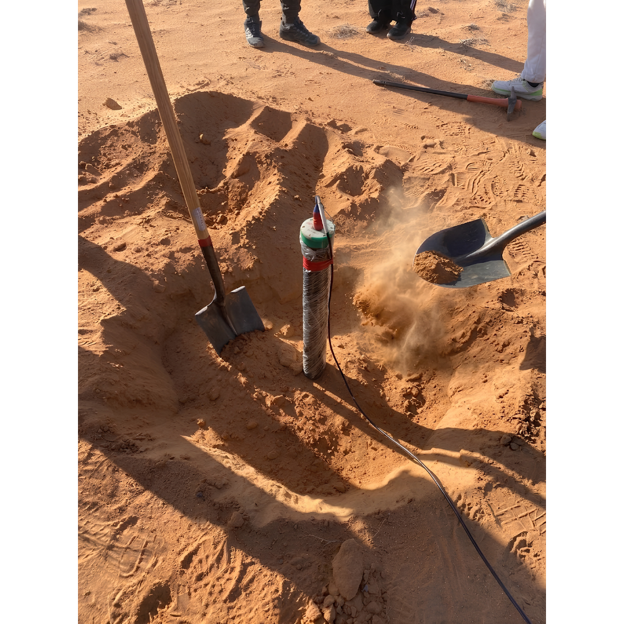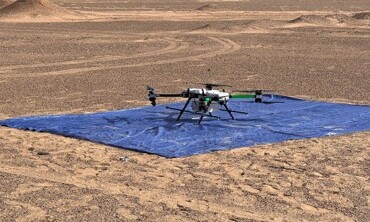
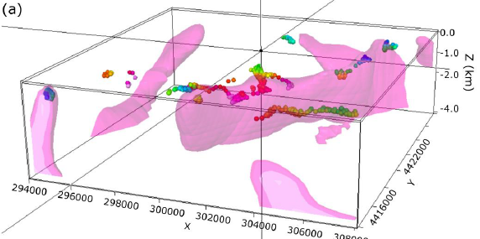
TDS works on how natural hydrogen is generated, migrates and accumulates, with a focus on ophiolitic and ultramafic rocks where serpentinisation produces hydrogen through water-rock reaction. In north-western Greece, aeromagnetic and gravity data, advanced magnetic processing, Euler deconvolution, structural interpretation and gas geochemistry were combined to link ultramafic bodies imaged to about 4 km depth with deep-rooted faults and active gas seeps, where measurable hydrogen occurs within methane-dominated emissions. Building on that case, TDS is developing a transferable, physics-based workflow for the Arabian-Nubian Shield that joins remote sensing and AI-assisted structural mapping with gravity, magnetic, electromagnetic and magnetotelluric surveys, field hydrogen measurements and laboratory petrophysics in constrained 3D models of source, pathway, reservoir and seal.
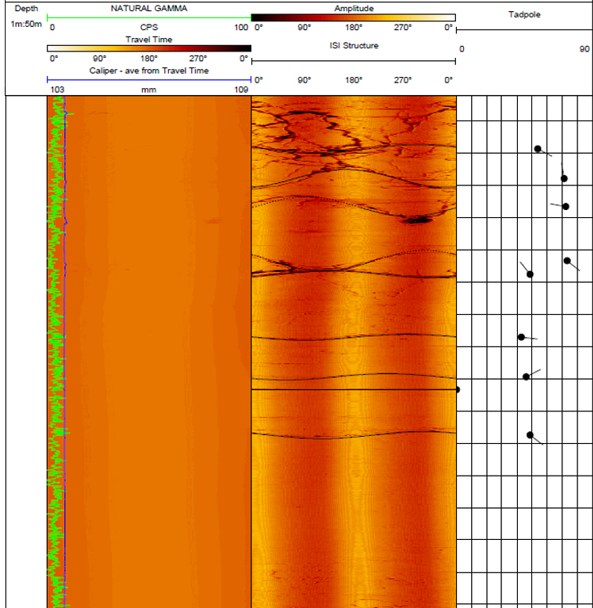
Geothermal Well Logging and Reservoir Characterisation
Harrat Al Madinah volcanic field, western Saudi Arabia
TDS logged three deep geothermal wells of about 1,000 m each and processed and interpreted the data to characterise the resource.