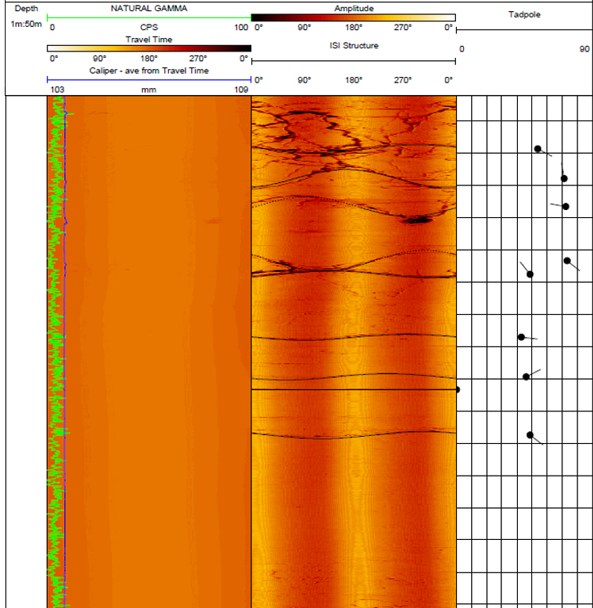
TDS logged three deep geothermal wells of about 1,000 m each and processed and interpreted the data to characterise the resource. Temperature, fluid conductivity, neutron, density, resistivity, self-potential, caliper, spectral gamma (K, U, Th) and acoustic televiewer logs were acquired, quality-controlled and depth-matched. From them TDS derived geothermal gradients, thermal anomalies and heat flow; radiogenic heat production; porosity, basalt flow units and altered or clay-rich intervals; fracture dip, azimuth, density and aperture; present-day stress orientation from breakouts and drilling-induced fractures; and the permeable, fractured intervals that control fluid flow, compared well by well.
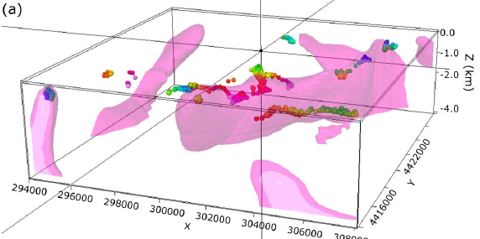
Natural Hydrogen Exploration: Integrated Geophysics, Geochemistry and AI-Assisted Modelling
North-western Greece · Arabian-Nubian Shield (Saudi Arabia, Egypt, Oman, United Arab Emirates)
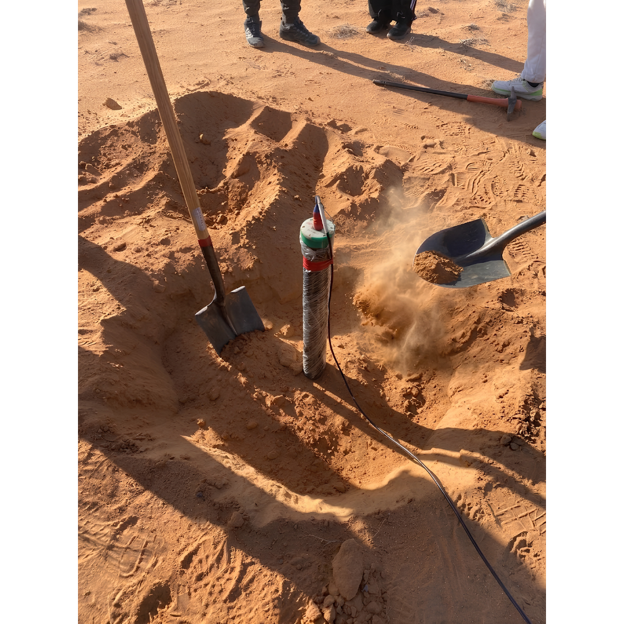
TDS works on focus on ophiolitic and ultramafic rocks where serpentinisation produces hydrogen through water-rock reaction.